

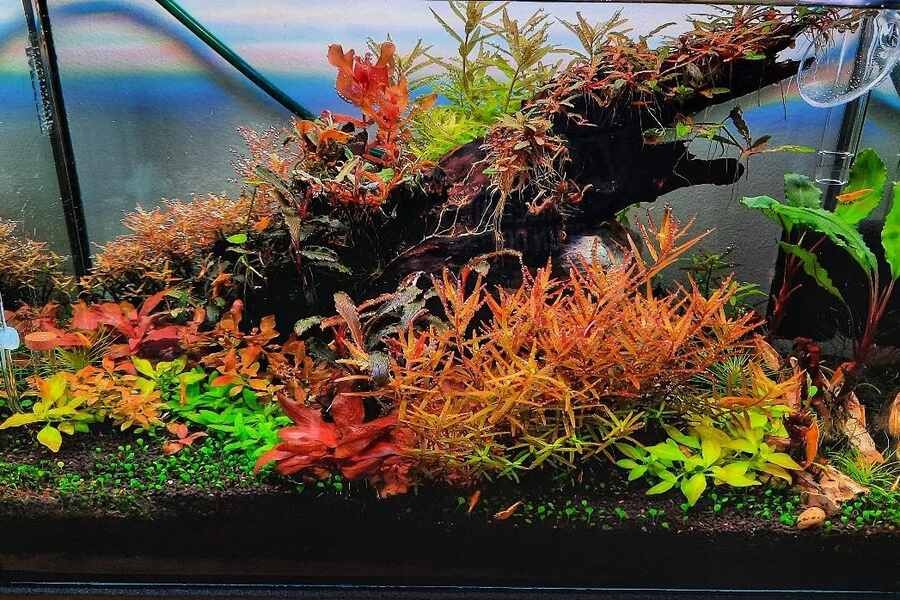
Aquarium plants can be not only a beautiful decorative element but also true “chameleons” that change their color depending on environmental conditions. This amazing phenomenon allows for unique aquascapes, where plants play an important role by drawing attention with their colorful diversity. This is especially evident with red plants, which can alter their shades depending on light, CO₂ levels, and other factors. These plants, including many hardy species, not only add vibrant colors to your aquarium but also help maintain a balanced ecosystem, as many can adapt to different conditions.
Knowing which conditions promote color changes in plants helps not only to enhance the aquarium’s appearance but also to create a healthier and more balanced ecosystem. It is important to understand how plants respond to various parameters and how to manage their growth and development to unlock their full potential. Here, we’ll discuss four popular plants that change their color based on their environment.
Helanthium tenellum Red
Helanthium tenellum Red is a plant that changes color depending on light intensity and soil composition. Under strong lighting and high CO₂ levels, its leaves turn a bright red with a greenish tint on the edges. In lower light conditions and with minimal fertilization, the plant will have a duller green color. Helanthium tenellum Red is well-suited for aquariums with moderate lighting and can be planted in the middle or background of the tank.
Bacopa caroliniana
Bacopa caroliniana is an easy-to-care-for plant that changes color depending on the lighting and CO₂ levels. In bright light, its leaves can take on a reddish hue, while under lower light conditions, it remains green. This plant also responds to nutrient levels in the substrate — with higher levels of fertilizer, its growth speeds up, and its color becomes more intense. Bacopa can be used in both middle and background areas of the aquarium.
Blyxa japonica
Blyxa japonica is a popular aquarium plant that changes color depending on light intensity and nutrient levels in the water. With good lighting and high CO₂ levels, its leaves become brighter, shifting from green to a yellowish tint. When the plant receives less light, it becomes paler and loses its golden hue. Blyxa japonica grows best in the foreground, forming dense clusters.
Didiplis diandra
Didiplis diandra is a plant that changes its color based on lighting conditions and CO₂ levels. In bright light and with adequate CO₂, its leaves can take on a reddish tint, while in lower light, the plant will remain green. This plant is ideal for use as a focal point in the background or for creating dense foliage in the aquarium.
