

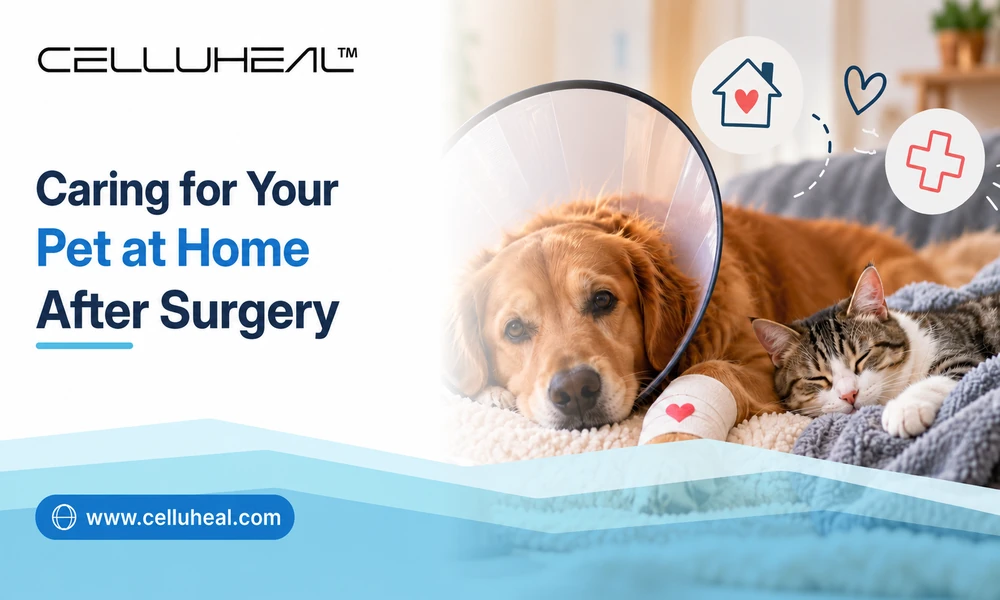
Your dog is finally home after surgery. They’re still groggy, they keep going for their stitches, and all they want is to jump up on the sofa. A cat might hide under the bed instead, or try to climb somewhere it really shouldn’t.
Those first days raise a lot of questions. Should your pet be eating normally? How much activity is too much? And what is the incision supposed to look like?
Your veterinarian’s discharge instructions always come first. Alongside them, there’s plenty you can do at home to make recovery easier for your pet, and for you.
The first night home
Anesthesia can leave your pet tired, unsettled and less interested in food. Set up a quiet place for them to rest, away from children, noise and other animals.
Dogs should go outside on a leash for bathroom breaks only. Hold off on running, jumping and unnecessary trips up and down the stairs until your veterinarian says normal activity is fine.
Cats can be harder to keep still. A small, comfortable room with food, water and a litter box can help limit jumping and climbing.
Follow the feeding instructions you were given. Some pets eat less or skip a meal during the first 24 hours after surgery. If vomiting continues, your pet’s appetite does not begin returning as expected, or they seem unusually weak, contact your veterinary clinic.
Keeping them away from the stitches
Stopping your pet from licking the incision is one of the hardest parts of recovery. Dogs may go for it the moment you look away, and cats can be just as determined when the incision is within reach.
Licking and chewing can damage stitches and increase the risk of infection. A properly fitted recovery cone can help prevent your pet from reaching the area. Depending on the procedure and incision location, your veterinarian may recommend a recovery suit instead.
Don’t take the cone off simply because your pet looks uncomfortable in it. If they genuinely cannot eat, drink or move around comfortably, ask your veterinarian about suitable alternatives.
What the incision should look like
Check the incision as often as your veterinarian recommends. You can look at it without touching it or disturbing the stitches.
Mild redness, bruising or slight swelling can occur during the first few days. The edges should generally stay together, and the area should gradually improve as healing progresses. Taking a photo when your pet first comes home can make later changes easier to notice.
Call your veterinarian if swelling gets worse, redness spreads, bleeding continues, discharge develops or you notice an unpleasant smell.
Don’t apply alcohol, hydrogen peroxide, creams, ointments or other topical products to a surgical incision unless your veterinarian specifically tells you to.
Does your pet need a dressing?
Not always. Many routine procedures leave a closed incision that should simply be kept clean and dry. Some injuries or procedures, however, may involve an open wound that needs additional care.
In those cases, your veterinarian may recommend a specialized dressing based on the wound’s location, depth and drainage.
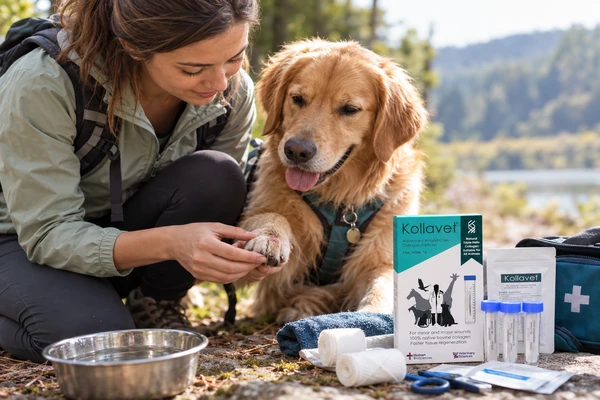
For appropriate animal wounds, one option your veterinarian may consider is Kollavet® Collagen Particles.
Kollavet is made from 100% native Type I bovine collagen, and its product information lists surgical sites, traumatic wounds and superficial wounds among its applications.
Following the product directions, the wound is cleansed first and a layer of particles approximately 1/4 inch thick is applied across the wound surface. An absorbent dressing or aerosol bandage can then be used to secure the particles. The dressing is changed daily, or as directed by the veterinarian.
Because Kollavet is bovine-derived, it should not be used in animals with a known sensitivity to bovine-derived materials. It is also not something to apply to a routine closed surgical incision unless your veterinarian specifically recommends it.
You can also view the Kollavet veterinary wound care range for other animal wound care options.
Looking after a bandage
If your pet comes home with a bandage, ask your veterinarian when it needs changing and how to protect it.
Keep the bandage clean and dry. If it becomes wet, starts slipping, smells unpleasant or seems to be causing discomfort, contact the clinic rather than trying to tighten or adjust it yourself.
For a bandaged paw or limb, check the exposed toes for swelling, redness or other changes. Avoid bathing or swimming until your veterinarian confirms the area has healed sufficiently.
Getting back to normal
Your dog may feel ready to play long before the incision has healed, and a cat may start jumping onto furniture as soon as they have more energy.
Keep following your veterinarian’s activity restrictions even when your pet seems completely back to normal. For many surgeries, activity may be restricted for around 7 to 14 days, but the correct timeline depends on the procedure and your pet’s recovery.
Continue any prescribed medication as directed, attend follow-up appointments and keep monitoring the incision.
If your pet seems increasingly uncomfortable, stops eating, becomes unusually quiet or the wound changes unexpectedly, contact your veterinarian rather than waiting for the next scheduled appointment.
Recovery happens at home
Most of your pet’s recovery happens on your watch: a quiet place to rest, regular incision checks, prescribed medication and enough activity restriction to stop them from overdoing it.
Keep your veterinarian’s number handy and ask whenever something does not look or feel right.
