

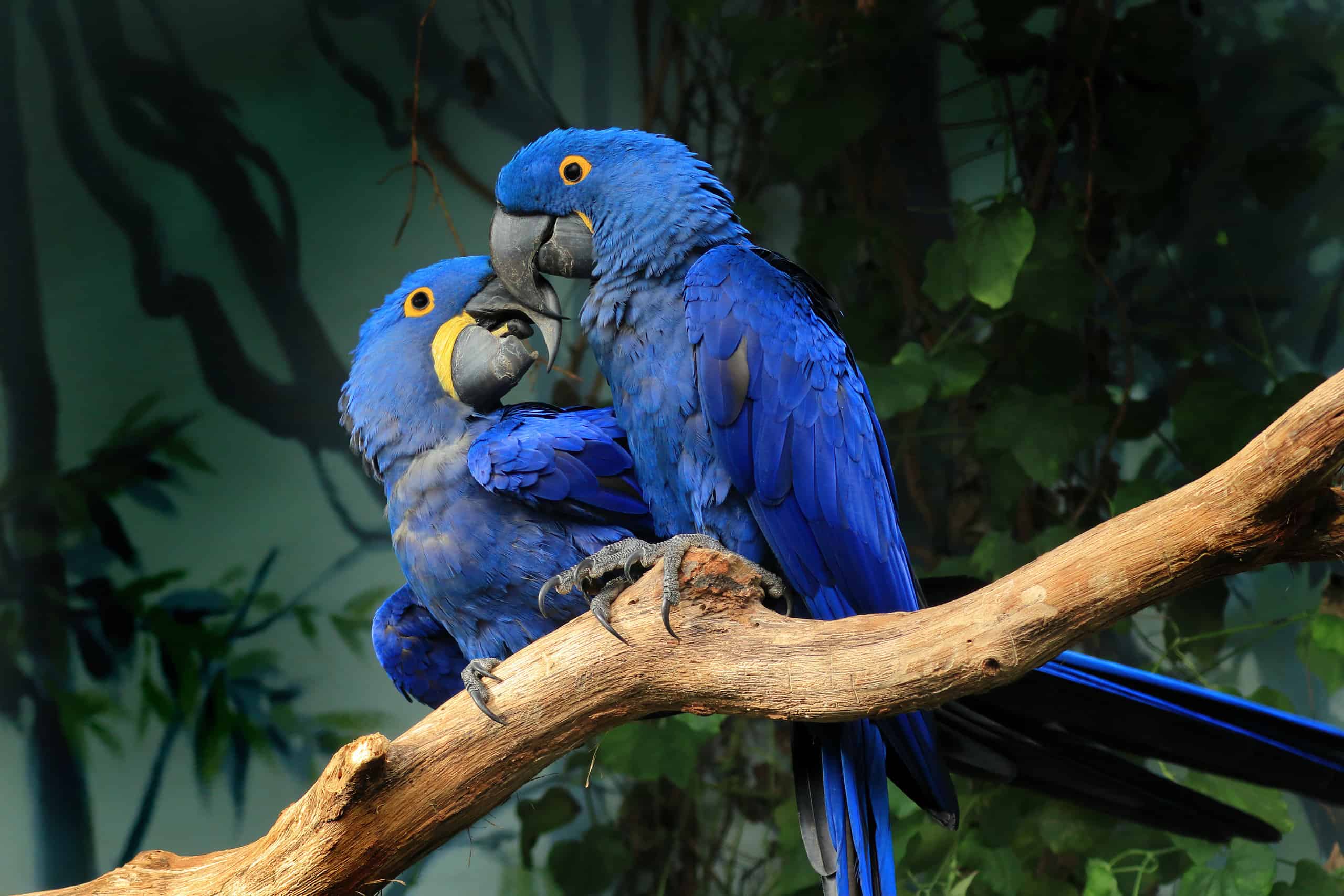
Have you ever considered how amazing and colorful the macaw world is? The similarities between Glaucous Macaw and Hyacinth Macaw make them two of the most wonderful birds. Why are they so similar, and what distinguishes them? Thus, let us look into the answer of why are the glaceous macaw and hyancith macaw so alike. All of their distinct features and ways in which their numbers can be maintained through conservation practice and where to get hyacinth macaws for sale if you are interested in owning one.
Why are The Glaceous Macaw and Hyancith Macaw so Alike
In the avian world, The Glaucous Macaw and Hyacinth Macaw are among the most beautiful birds. They are large and have bright colors; therefore, they are often found in South America. The Glaucous Macaw used to live in Argentina, Brazil and Paraguay but now it is critically endangered. Some people think that this species may already have been lost completely (extinct). On the other hand, Hyacinth receives nourishment from Bolivia as well as part of Brazil and Paraguay despite many threats facing it today.
These magnificent birds carry great weight not just in terms of their stunning appearance but also for the purposes they serve in the ecosystem. They play an important role in the dispersal of seeds and ensuring the well-being of tropical forests. It is essential for ornithologists and people passionate about birds to understand their resemblances as well as the differences that exist between them if they want to adore and preserve these birds.
Physical and Behavioral Similarities
Striking Plumage and Size
In terms of plumage color, Glaucous and Hyacinth Macaws both possess radiant blue feathers. The cobalt blue feathers seen on hythian Macaws are glaring while glaucous macaws sport a muted blue green colouration that is hardly noticeable. Because their colors are alike, birdwatchers sometimes have difficulty distinguishing them from one another. Also, they rank among the biggest birds of this type, with hyacinth macaw having the largest wingspan in a flying parrot to date.
Feeding Habits
With respect to nutrition, both groups depend for the most part upon fruits, nuts and seeds. Powerful enough are their beaks for them to break even hardest shelled seeds into half. This is an excellent manifestation of adaptation to their ecological habitats. The birds have also been observed to feed on soil from river banks to remove some of toxins present in certain foods that they eat.
Nesting Behavior
Nest in tree holes (Glaucous and Hyacinth Macaws prefer) for their representation. They look for enormous trees which are mature enough to fit their size while at the same time protecting them against enemies. Such breeding behavior is important for their existence since it guarantees security for their various types of eggs and nestlings..
Differentiating Factors
Size and Shape
The Hyacinth is typically larger than the Glaucous Macaw, although both species are large. The Hyacinth can reach lengths of up to 40 inches, with a wingspan that can exceed 4 feet, while the Glaucous Macaw is slightly smaller, measuring about 28-30 inches on average.
Distinctive Facial Markings
Within this topic, one of the most apparent distinctions is on facial markings. The lower part of its beak is yellow while Hyacinth macaw has a unique yellow circle surrounding its eyes. On the contrary, Glaucous Macaw exhibits muted facial markings characterized by less pronounced yellowish hues.
Vocalizations
Vocalization is another important factor that differentiates them. The Hythian Macaw is widely recognized for its loud and harsh calls that may travel over great distances. The Glaucous Macaw on the other hand, although it makes sounds too, has them presented in a softer and more tuneful manner. Such vocal differences are essential in facilitating identification particularly when in the habitats.
Conservation Status
The Plight of the Glaucous Macaw
The Glaucous Macaw is critically endangered and has not been seen in recent years. A drastic decrease in their population has occurred because of habitat destruction, illegal pet trade and hunting. Since some of the experts are expressing doubts about the survival of the species, it is necessary to undertake conservation measures immediately.
The Threats Facing the Hyacinth Macaw
Even though the Glaucous Macaw is in a worse situation than the Hyacinth Macaw, it still has serious challenges facing it. The data indicates that the following are main causes of low population numbers; deforestation, habitat fragmentation, and illegal pet trading. Efforts are being put by our conservationists to preserve them in their original homes and make sure they live on.
Perfect Place to Get Hyacinth Macaws for Sale
Parrots For Sales is a great place to get hyacinth macaw for sale. They are well-known for ethical breeding practices and their conservation effort is fully legal. The farm hatches and raises their birds in their own aviary. Click the link to get your own hythian bird: https://www.parrotsforsales.com/product/hyacinth-macaw/
Conclusion
Glaucous Macaw and Hyacinth Macaw are Amazing species that belong to different families. These birds have similarities and differences which make them unique in their own right. Hence, learning about such features can help us value these birds more as well as the important functions they perform in their habitats. Efforts towards conserving this wildlife must go on, and at this point in time it is paramount for bird lovers and those involved in wildlife conservation to step up and be heard.
